
Running Costs and Efficiency
The savings of an EV compared to a petrol car are between €1,200 and €1,450 per year for an average driver in Spain who charges at home. We analyse the real cost per 100 km with operational data, the impact of on-the-go charging, preventative maintenance, and the exact break-even point.
Quick Summary
- Home energy cost: Travelling 100 km in an EV, charging during off-peak hours, costs between €1.50 and €2.50, compared to €10.50 – €12.50 for a comparable petrol car.
- Direct annual savings: For 15,000 km per year, home electricity expenditure is around €288, compared to over €1,730 for 95 octane petrol, saving over €1,440 annually.
- Garage costs: Preventative maintenance is between 20% and 30% cheaper thanks to the absence of a clutch, belts, spark plugs, and the use of regenerative braking which doubles the lifespan of the brakes.
- Impact of rapid charging: At ultra-rapid public charging points (>150 kW), the cost rises to €8.50 – €12.00 per 100 km, reducing the savings margin if a dedicated home charging point is not available.
- Payback period: The vehicle's premium typically pays for itself between 60,000 and 85,000 km, supported by the 15% income tax deduction (up to €3,000) and the lower cost per kilometre.
How much does it cost to travel 100 km in an EV versus petrol?
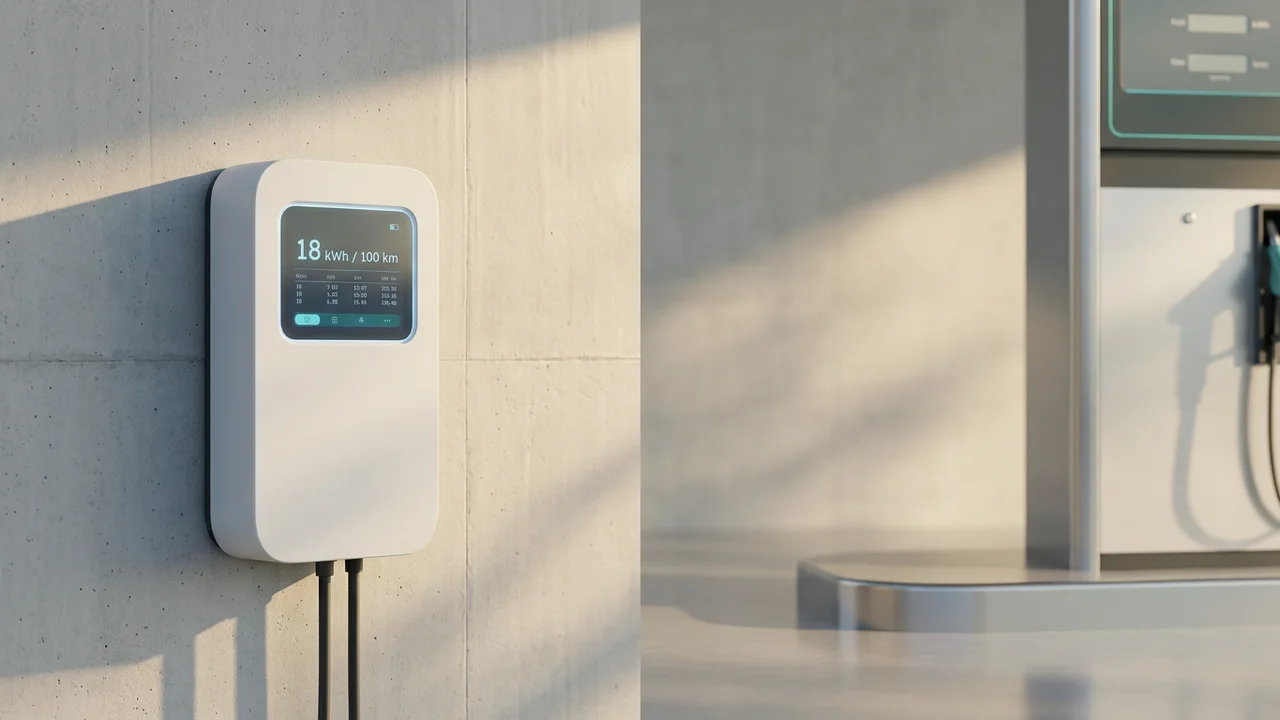
The energy cost of driving 100 kilometres in an EV in Spain typically ranges between €1.50 and €2.50 when charging at home with an off-peak tariff. In contrast, an equivalent compact petrol car with an approved average consumption of 7 litres per 100 km requires an outlay of between €10.50 and €12.50 at current fuel prices.
This radical difference lies in the powertrain's efficiency. While an internal combustion engine barely utilises between 25% and 35% of the chemical energy stored in petrol (dissipating the rest as heat and friction), an electric traction motor converts over 90% of the battery's electrical energy into direct movement at the wheels. To understand how these figures translate to real-world driving compared to catalogue figures, it's worth reviewing the analysis of real EV consumption (Available in Spanish) according to road type and weather conditions.
Official price reference: Fuels show weekly variations according to the average fuel price in Spain according to the MITECO Geoportal, where petrol 95 trades at around €1.65/litre. Meanwhile, domestic electricity during off-peak hours (00:00 to 08:00) under 2.0TD tariffs or indexed free market rates averages €0.08 to €0.14/kWh according to the hourly electricity tariffs in the regulated market (PVPC) managed by Red Eléctrica de España.
| Parameter | EV (Home off-peak charging) | EV (Rapid on-the-go charging) | Petrol (Compact 7 l/100 km) |
|---|---|---|---|
| Unit energy price | €0.12 / kWh | €0.55 / kWh | €1.65 / litre |
| Weighted average consumption | 16 kWh / 100 km | 17 kWh / 100 km | 7.0 litres / 100 km |
| Cost per 100 km | €1.92 | €9.35 | €11.55 |
| Annual energy expenditure (15,000 km) | €288.00 | €1,402.50 | €1,732.50 |
| Annual savings compared to petrol | -€1,444.50 | -€330.00 | Base reference |
For an average user travelling 15,000 km per year, domestic electricity consumption represents less than €300 annually (about €24 per month), while a combustion vehicle demands over €1,700 annually (about €144 per month). The net gap exceeds €1,400 per year solely in energy refuelling.
Electromobility could be your best investment.
Discover how much you would save on fuel by purchasing an EV.
Home vs. public on-the-go charging: how the cost per kilometre changes
The location where the vehicle's battery is charged significantly determines the profitability of an EV. When using the rapid and ultra-rapid charging network on motorways (>150 kW DC), the cost per kWh rises to a range of €0.55 to €0.69/kWh without monthly subscriptions, which places the cost at €8.50 – €12.00 per 100 km, approaching the figures of an efficient combustion engine.
For daily urban and suburban journeys, the EV completes the vast majority of its cycles using tethered charging (private or communal garage) at power ratings between 3.7 kW and 7.4 kW in alternating current. However, for medium and long-distance trips, factors such as the charging curve and the state of charge (SoC, State of Charge, which represents the percentage of energy remaining in the battery) come into play. To optimise time and budget on the motorway, consult how to optimise rapid charging on long journeys by operating within the peak performance window (between 10% and 80% SoC), where peak power is sustained and the tariff is not penalised for excessive time.
In terms of availability, QuantumDrive's catalogue compares 579 EV models, analysing both their net battery capacities and the differences between the official approved range under the WLTP cycle (Worldwide Harmonised Light Vehicle Test Procedure) and sustained consumption at 120 km/h on the motorway.
Energy decision rule according to your infrastructure
- With a charging point at home: 85–90% of annual kilometres are covered at off-peak rates (€1.90/100 km). Annual savings are maximised (€1,200 – €1,500).
- Public urban AC charging (11–22 kW): With average tariffs of €0.25 – €0.35/kWh on public roads or in shopping centres, the cost per 100 km is around €4.50 – €5.60. Savings compared to petrol are still around 50%.
- Exclusive ultra-rapid charging on the go: If you rely entirely on high-power charging stations (>150 kW) at €0.55 – €0.69/kWh, the cost reaches €9.35 – €11.70/100 km. In this scenario, the economic justification for fuel diminishes, and urban operational advantages (access to Low Emission Zones and parking exemption) prevail.
Savings on servicing, brakes, and mechanical wear
The cost of preventative and corrective maintenance for an EV is between 20% and 30% lower than for an equivalent combustion model, according to operational audits by RACE. The technical explanation lies in the kinematic simplicity of the electric platform compared to the thermal mechanical system.
An electric propulsion system completely dispenses with the elements subjected to the greatest mechanical, thermal, and chemical stress in a traditional engine: engine oil, fuel and oil filters, spark plugs or glow plugs, timing belt or chain, clutch, dual-mass flywheel, conventional alternator, multi-ratio gearbox, turbocharger, particulate filters, and catalytic reduction systems with AdBlue.
Mechanical components: service life and direct savings
Workshop intervention for an EV is practically restricted to:
- Regenerative braking: When releasing the accelerator or lightly pressing the pedal, the electric motor reverses its operation and acts as a generator to recharge the battery. This electric engine braking handles most routine decelerations, extending the service life of brake discs and pads beyond 120,000 or 150,000 kilometres.
- Service fluids: These are reduced to brake fluid (due to hygroscopic degradation every 2 years), windscreen washer fluid, and coolant for the thermal management of the high-voltage battery (the temperature regulation circuit that keeps the cells in their optimal range of 20°C to 35°C to preserve their service life), whose replacement interval is usually set between 150,000 and 200,000 km depending on the manufacturer.
- Cabin filter: Periodic replacement of the pollen and fine particle filter, identical to any vehicle on the market.
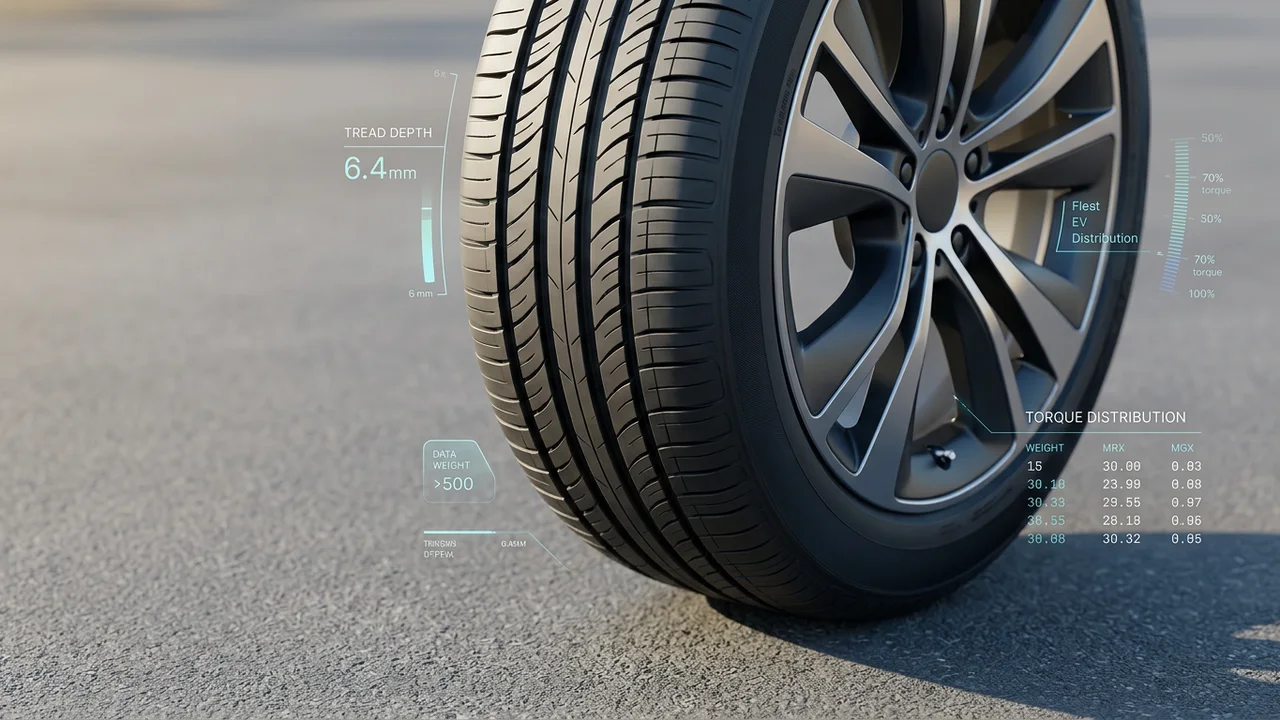
Tyre wear: It should be noted that EVs weigh between 200 and 400 kg more than an equivalent internal combustion vehicle and deliver instant torque from 0 rpm. An aggressive driving style can accelerate tyre wear by 10% to 15%, a factor that must be managed through progressive driving and the choice of specific compounds with low rolling resistance.
When is the additional purchase cost amortised? Real-world scenarios
The economic amortisation point or break-even for an EV is usually reached between 60,000 and 85,000 kilometres of driving in Spain (between 4 and 6 years for a user driving 15,000 km annually). Beyond this usage threshold, the accumulated savings in electricity versus hydrocarbons, lower workshop costs, and tax advantages outweigh the initial price difference compared to a comparable petrol model.
To rigorously calculate the break-even point, it is necessary to consider the net acquisition investment reduced by tax incentives, plus the cost of the domestic charging point with its installation (typically between €1,000 and €1,600 before deductions):
Technical amortisation formula
Kilometres to amortise = (Net purchase surcharge + Wallbox installation cost) / Total savings per kilometre
Where Total savings per kilometre combines the fuel differential versus domestic electricity (approx. €0.096/km), the reduction in preventative servicing (~€0.015/km), and municipal tax bonuses.
Within the Spanish fiscal and regulatory framework, there are verifiable levers that accelerate the return on investment:
- Income Tax (IRPF) for purchase: The 15% deduction in IRPF for the purchase of EVs allows for a deduction of up to €3,000 (based on a maximum legal base of €20,000) from the state's gross tax liability.
- IRPF for charging point: Additional 15% deduction on a cap of €4,000 invested in the installation of a domestic charger in owned properties (tax saving of up to €600).
- Scrappage and purchase incentives: As a guide, selling your old vehicle can generate an additional incentive via the Energy Saving Certificates (CAE) scheme (typically between €750 and €950 for a passenger car), complementing direct purchase aid programmes such as the Auto+ Programme.
- Road tax (IVTM): Most municipalities apply up to a 75% bonus on Vehicle Excise Duty for zero-emission models.
- Regulated parking: In large cities, the advantages of the DGT's Zero Emissions environmental badge include free and unlimited parking in regulated zones (SER/AREA), which for an urban driver represents recurring savings of between €600 and €1,200 per year.
Practical scenario resolved: For an initial purchase premium of €8,000 compared to a combustion compact, reduced to €5,000 after applying the €3,000 income tax deduction, and adding a net €1,000 for the installed wallbox after its own tax deduction (net investment to recover: €6,000): at a rate of 15,000 km/year with a combined saving of €1,444 in fuel and around €200 in workshop costs, the total amortisation is completed in 3.6 years (around 55,000 km). From that point on, the user generates a net saving of more than €135 per month.
Plan with QuantumDrive, travel with peace of mind.
Discover your optimal route taking into account EV charging points and your actual range.
Recommended reading for calculating costs and range
Real-world range versus WLTP cycle
Learn how motorway speed and outside temperature influence kWh/100 km consumption to accurately calculate your travel costs.
Real-world range calculator
Estimate your battery's effective range before embarking on long journeys, considering topography, average speed, and onboard load.
EV chargers: what to look for (Available in Spanish)
Essential criteria for evaluating charging power, connectors, and tariffs before connecting your EV at public charging stations.
Frequently asked questions about saving money with EVs
How much money do you save per month on fuel with an EV?
For a typical monthly mileage of around 1,250 km (15,000 km per year), an average petrol car spends between €130 and €155 on fuel, while an EV charged at home overnight requires between €20 and €28 of electricity. The net monthly saving ranges from €100 to €125 exclusively on energy.
Do you still save money if you don't have a home charger and charge on the street?
If public AC charging stations (11–22 kW) are used with urban tariffs of €0.25 to €0.35/kWh, the cost is €4.50 – €6.00/100 km, maintaining a 50% saving compared to petrol. However, if only rapid DC charging at more than €0.55/kWh is used, the cost reaches €9 – €11/100 km, equating to that of an efficient combustion car.
How much does it cost to install a domestic wallbox charger?
The all-inclusive cost of a smart charger with load balancing and its professional installation usually ranges between €1,000 and €1,600 depending on the distance to the main electrical panel. This amount benefits from a 15% income tax deduction on a maximum of €4,000 of accredited investment.
Why is preventive maintenance for an EV more economical?
Preventive maintenance is reduced by between 20% and 30% due to the absence of oil, combustion filters, auxiliary belts, spark plugs, or clutch. In addition, regenerative braking handles most of the kinetic effort, extending the durability of brake discs and pads beyond 120,000 km.
At what motorway speed does EV consumption start to soar?
Due to quadratic aerodynamic drag, specific consumption increases sharply from 115–120 km/h. Driving at a sustained 120 km/h usually increases consumption by between 18% and 25% compared to driving at 100 km/h, increasing the cost per kilometre if charging at high-power public charging stations.